

SWIMMING SAFELY
Today I read of a two-year-old who drowned in a pool. Last week I read a 9-year-old drowned. It happens every summer and breaks the hearts of families. Drowning is the leading cause of death for children. Drowning can be silent as a child slips under water without splashing.
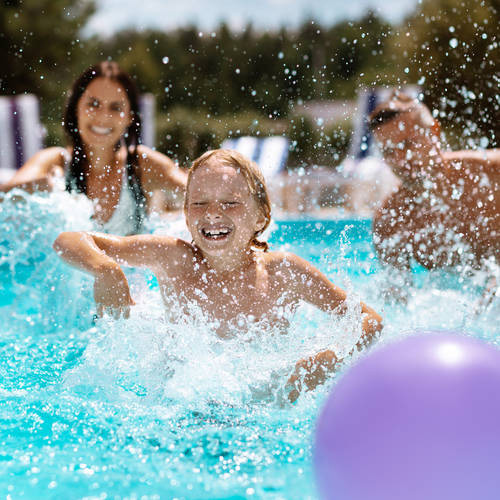
Please read The American Red Cross guidelines regarding swimming this summer:
- Swim in designated areas supervised by lifeguards. Always swim with a buddy; do not allow anyone to swim alone.
- Provide close and constant attention to children you are supervising, even when a lifeguard is present, no matter how well the child can swim or how shallow the water. Avoid distractions including cell phones.
- Never leave a young child unattended near water and do not trust a child’s life to another child; teach children to always ask permission to go near water.
- Designate a “water watcher” whenever in a group setting.
Take smart precautions and use layers of protection.
- Stay within an arm’s reach of any weak or inexperienced swimmer who is in the water.
- Have young children or inexperienced swimmers wear U.S. Coast Guard-approved life jackets around water, but do not rely on life jackets alone.
- Do not rely on the use of water wings, swim rings, inflatable toys or other items designed for water recreation to replace adult supervision.
- If you have a pool, secure it with appropriate barriers to prevent unsupervised access to the water.
- Many children who drown in home pools did so during non-swim times – when they weren’t expected to be in the water, including as the swimming activity was coming to an end and everyone was thought to be out of the water.
- Children were often out of sight for less than 5 minutes and in the care of one or both parents at the time.
Ensure that everyone in the family learns to swim well and what to do in a water emergency.
- If a child is missing, check the water first. Seconds count in preventing death or disability.
- Know how and when to call 9-1-1 or the local emergency number.
- Have appropriate equipment, such as reaching or throwing equipment, a cell phone, life jackets and a first aid kit.
- Enroll in age-appropriate Red Cross water orientation and learn-to-swim courses.
- Enroll in Red Cross home pool safety, water safety, first aid and CPR/AED courses to learn how to prevent and respond to emergencies.
Please have fun but be safe and protect your family and friends by employing these tips.