
Choose Plants For All-Important Honey Bees
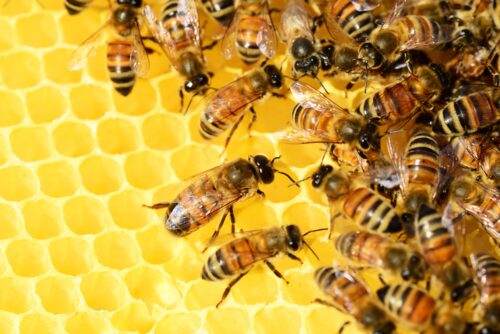
Bees are essential for ecosystem health and human survival. Honey bees are super-important pollinators for flowers, fruits and vegetables as they pollinate 80% of insect-pollinated crops. Bees transfer pollen between the males and females, allowing plants to grow seeds and fruit.
Honeybees live in colonies of 40,000–65,000. A honeybee hive consists of one queen, many female workers, and male drones. Queens can live for several years and lay up to 2,000 eggs per day. She does not have a stinger, unlike the worker bees. If the queen bee dies, workers will create a new queen by selecting a young larva (the newly hatched baby insects) and feeding it a special food called “royal jelly “. This enables the larvae to develop into a fertile queen.
The average worker bee lives for just five to six weeks. During this time, she’ll produce around a twelfth teaspoon of honey. Working together, these efficient worker bees produce 2-3 times more honey than they need, so we get to enjoy the fruits of their labor too. Honey is a natural, nutritious sweetener that has been harvested for thousands of years.
Bees fly at a speed of around 15 mph and beat their wings 200 times per second. They have a super sense of smell possessing 170 odorant receptors, allowing them to distinguish between different scents so they can recognize different types of flowers when looking for food. They use their scent to mark flowers, allowing them to avoid those already visited. Bees can see ultra-violet light, helping them navigate.
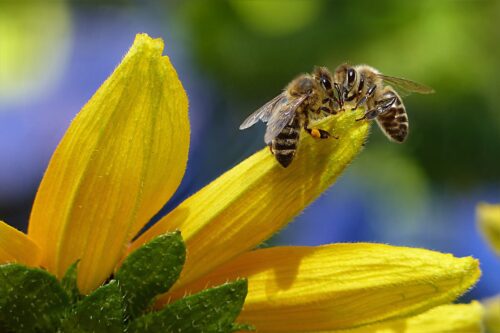
They communicate through a “waggle dance” to locate food, and a single pound of honey requires visiting 2 million flowers. When the worker returns to the hive, it moves in a figure eight and waggles its body to indicate the direction of the food source.
To attract honey bees, plant a diverse mix of nectar-rich, blooming plants like Lavender, Basil, Borage, Rosemary, Thyme, Mint, Oregano, Crocus, Purple Coneflower (Echinacea), Bee Balm (Monarda), Black-eyed Susan, Asters, Goldenrod, Sedum, Foxglove, Sunflowers, Zinnias, Cosmos, Verbena, Mexican Sunflower, as well as fruit trees and Poplars. This will ensure a continuous supply of food from spring to late fall. Choose simple flower shapes, plant in like groups which bees prefer, and avoid pesticides. When buying honey, try to choose varieties that are locally made to support our honeybees and their bee keepers.